America's 250th Birthday: Boom or Bust?
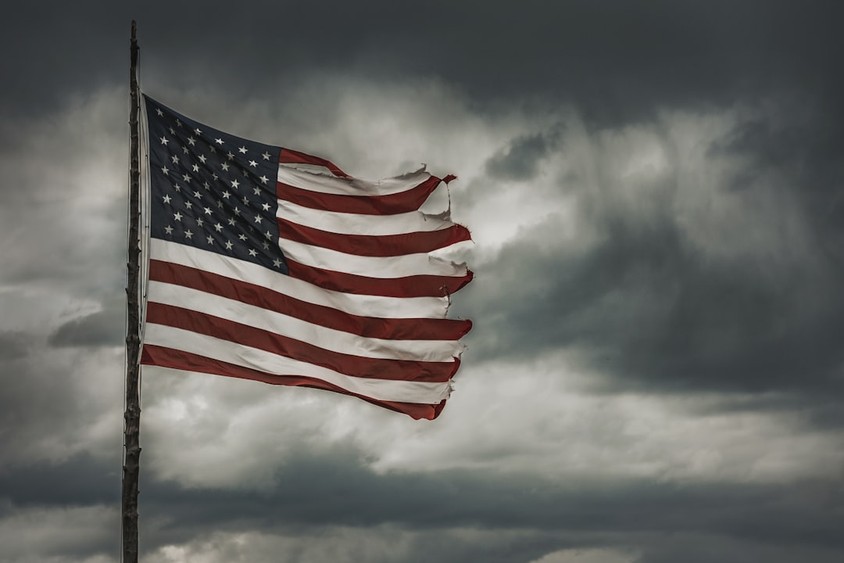 A downpour signals its arrival, drenching the ground with rain. We feel its coming. We smell the heavy air, scented like freshly mowed grass.
After such storms pass, we feel purified air settling into our stillness, like a guard standing at attention by the Tomb of the Unknown Soldier in Arlington National Cemetery. Our hearts boom with sheer delight after the storm has come and gone.
The Wall Street Journal Editorial Board advises Americans to regain confidence this Fourth of July in the office of the presidency. Look to our past, these editors declare. "The U.S. has tossed up leaders who have carried the country through crisis and rapid change," they believe.
Similar feelings toward a national leader gripped me in 1976. President Gerald R. Ford joined Americans celebrating the nation's Bicentennial. That year, I started over a half-century of portraying Thomas Jefferson in authentic 18th-century attire. I lived near the Revolutionary War's Princeton battlefield, studying colonial history for a decade at schools Presbyterians founded in 1746 and 1812. As Presbyterian clergy, I often attended meetings at Princeton's Presbyterian Church, which patriots turned into a field hospital to bind up the wounds of Revolutionary soldiers after the Battle of Princeton.
President Ford helped our nation discover its constitutional character at Independence Day ceremonies in 1976. His decency under stress inspired citizens. Feelings of pride in our country swelled so mightily that we enjoyed a boom in patriotism. Never a president to bask in the spotlight, Ford meekly admitted he was a trustworthy Ford, not a flashy, gold-plated Lincoln.
Ford's two-and-a-half-year presidency didn't feel like boom years. The U.S. suffered raw wounds after a decade of fighting in Vietnam and only two years after disgraced President Nixon's resignation. Inflation rose. Cars lined up for gasoline, which was in short supply due to a world energy crisis. The Middle East flared up with warring madness. Ford pardoned Nixon and knew his run for another term was dead on arrival. His approval rating hovered in the low 40s.
Prior to his presidency, Ford distinguished himself as our Fifth District congressman representing Grand Rapids, Michigan, where I grew up in an immigrant Dutch community. My Dad worked on his campaigns, starting in 1948. Though balding later, Ford in his youth had a shock of blond hair. He certainly looked Dutch! So all my relatives joined Midwest residents who endearingly called Ford "Jerry." Such a reference was not a sign of disrespect. We regarded Jerry as our adopted brother.
Years later, President Ford and I joined in working on the Beaver Creek Religious Foundation in Colorado. Ford and friends financed a handsome fieldstone interfaith chapel located along the main ski run. I served as President of the Foundation for seven years in the 1990s. The Board hosted Jerry's 80th birthday celebration in the chapel.
Hosting this tribute, I invited President Ford and his wife Betty forward to accept a certificate of our gratitude. During my remarks, I put my arm around the President's shoulder. A Secret Service agent sitting in the front pew was ready to leap forward to shield the President from my too-close buddy proximity.
Later, that Secret Service agent warned me that I broke protocol. No one is to touch the President! "He's my President," I responded. "We accept Jerry as a member of our families."
President Ford earned the Eagle Scout Award in his youth. He seldom strayed from the decency and moral backbone this achievement bestowed on him. When he succeeded, most citizens benefited.
The reason most Americans feel America 250 is more of a bust than a boom is because, unlike Ford, Donald Trump is an indecent leader. Some refer to him by his first name, "The Don," as if he cheats against limits of power as a Mafia boss does.
Trump is unopposed to self-flattery. Like a wet sponge, he soaks up self-congratulation so that any trace of humility is squeezed from his mind and actions.
This President makes of America 250 a bust. He acts as if Uncle Sam's number one job is to serve him, to gild his life with golden insider deals that handsomely pay him and his investor toadies.
Jerry Ford saw himself as a public servant in the White House, looking out for Americans and caring for their needs. Trump stares at himself and only cares for his enormous needs.
Will Americans decide for decency on our nation's 250th birthday? Do "The People" honor a constitution to right wrongs, treat immigrants compassionately, and instill a moral compass guiding indecent leaders toward a better way?
Comments
By 1976, the Civil Rights Movement had entered a hopeful phase, seeing legislation designed to bring about equality. The Supreme Court supported busing to equalize education in 1971, and in 1975, expansion of the Voting Rights Act passed. Voter registration community groups increased, and the United States signed the Helsinki Accords, which called for human rights across the globe.
Although Ford did not use the phrase "civil rights" in his Fourth of July speech, he noted, "It is good to know that in our own lifetime we have taken part in the growth of freedom and in the expansion of equality."
Ford's primary message was "...there is still so much to be done. We must increase the independence of the individual and the opportunity of all Americans to attain their full potential....We must work to enrich the quality of American life at work, at play and in our homes."
Looking back, we see that the optimism was not justified. Already in 1976, scholars and lawyers recognized that racism is complicated. They called their discoveries critical race theory and demonstrated that racism needs to be addressed in its systemic, institutional, and individual expressions.
Yet Ford's message that we must continue to work to make America better is still important for us today.
(Originally published in the Ending Racism USA newsletter, July 2023)