
Why do we Protest?
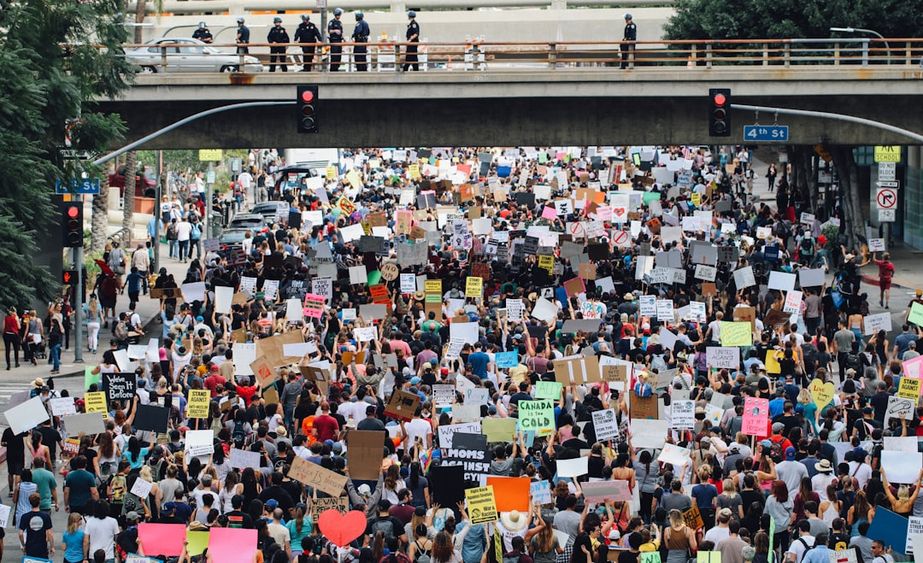
At a recent meeting of Westminster Indivisible (a member organization of ND2B Coalition), a question was asked: "How do we respond to those who ask us, 'Why do you keep going to protests when it is the same small group of people protesting every week?'"
On June 6th, 2026, the Substack Majoritarian Rules posted "Egypt Is No Longer Partying Like It's 2011":
When protests in other parts of the Middle East erupted, Egyptians began to mobilize (in secret) against Mubarak. The mobilization came to a head on January 25, 2011, when thousands of protestors embarked on a "day of rage," gathering in Cairo's Tahrir Square and demanding the end of Mubarak's regime. As one activist recalled to writer Rusha Latif:
"My feeling at this moment was that the street had mobilised, finally! … The explosion that we wanted had actually happened! All of us were thrown into a state of shock because we didn't. . . . I mean, we had thought a lot about how we would get the people to come out, but we had never thought about what we would do with the people if they did come out. We were all dazed and like, 'What are we going to do with all these people?!' Because we hadn't expected that they would come out. So when they actually did, it was like, 'OK, so what are we going to do now?!' That's when we started to say, 'To Tahrir Square!'"
Over the next few days, tensions grew before Egyptian police unleashed violence on the protestors. Some groups such as Amnesty International estimated that over 800 people were killed. With the deaths angering Egyptians across the political and ideological spectrum, Mubarak's days were numbered.
Is the answer to the question about why we protest, "We protest because we are getting ready for when the people come into the streets"? What planning are the groups you are part of doing for the day when protesters show up or the police unleash violence on them? Does our protesting today only make sense in the context of our planning for a transformed America? A transformed global human community?
The Majoritarian Rules Substack chronicles "the rise (and fall) of societies through the lens of majority rules. The blog is dedicated to showcasing how societies have engaged with majoritarianism and nationalism."